

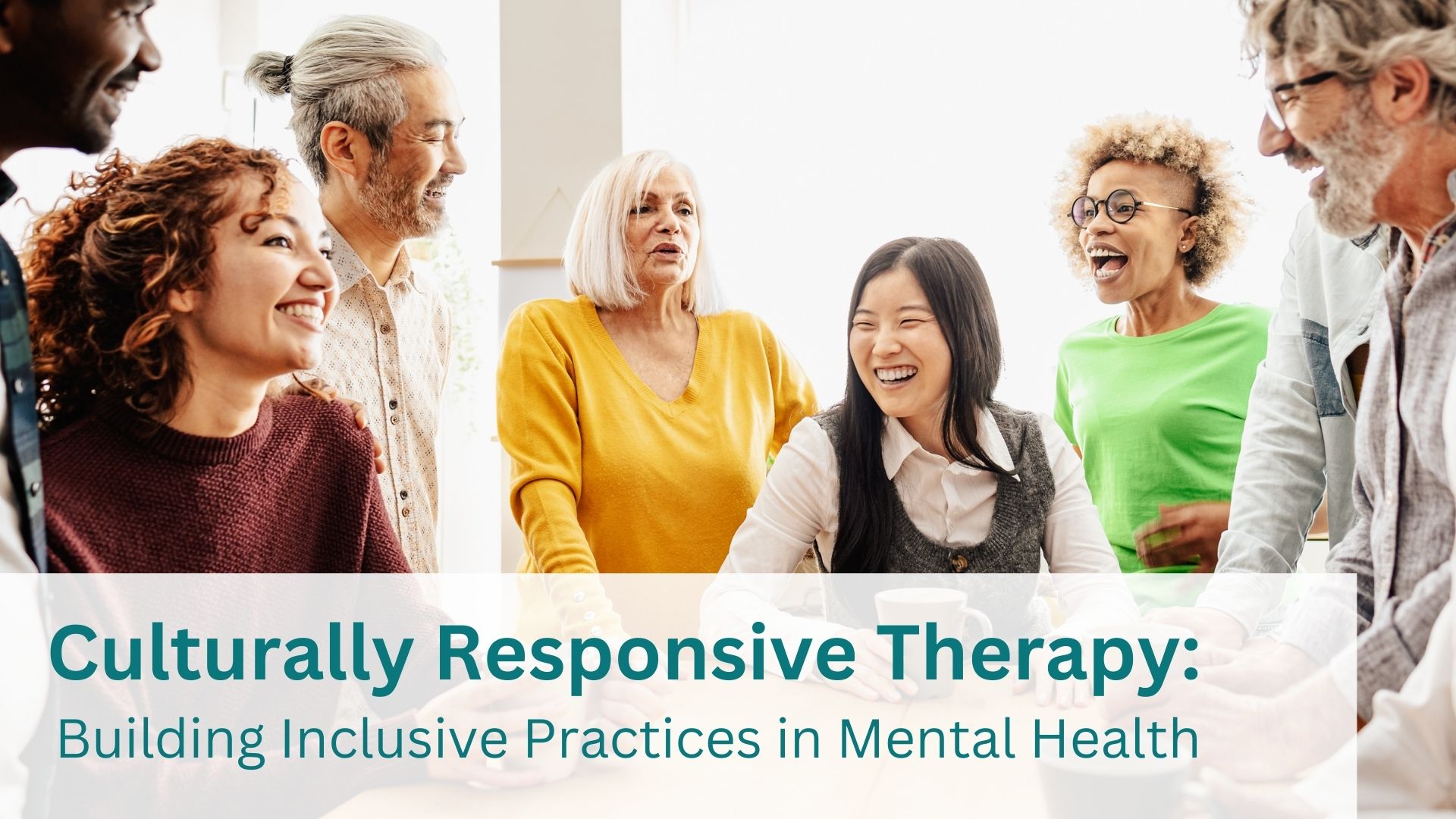

Culturally Responsive Therapy
As our communities become increasingly diverse, mental health professionals are called to expand their skills and understanding to better serve clients from all backgrounds. Culturally responsive therapy is not just a trend—it’s an essential approach for effective, ethical, and compassionate care.
In this post, we’ll explore the key concepts, challenges, and actionable strategies for culturally responsive therapy, drawing on insights from a recent Higher Thought Institute webinar. Whether you’re a seasoned clinician or new to the field, embracing culturally responsive therapy can transform your practice and the lives of those you serve.
Why Culturally Responsive Therapy Matters
Mental health professional in session with a diverse client, seated in a calm and welcoming therapy room, symbolizing trust and individualized care.
Culturally responsive therapy is the intentional practice of recognizing, respecting, and integrating clients’ cultural identities and experiences into the therapeutic process. For mental health professionals, this means moving beyond a “one size fits all” approach and developing the skills to adapt interventions, communication, and rapport-building to each client’s unique context.
The Higher Thought Institute’s recent webinar, led by Brandon Jones, emphasized that cultural identity, worldview, and power dynamics profoundly shape mental health and the therapeutic relationship. By understanding these factors, clinicians can foster trust, reduce misunderstandings, and improve outcomes for clients from diverse backgrounds.
Understanding Worldview and Cultural Identity
Illustration or photo representing multiple cultural influences—family, community, education, and media—intersecting around an individual silhouette.
A core principle of culturally responsive therapy is recognizing that every individual brings a unique worldview to the therapy room. Worldview is shaped by influences and experiences—family, community, media, education, and more. These factors inform our values, behaviors, and expectations, both as clients and as clinicians.
Brandon Jones highlighted the importance of self-reflection for mental health professionals. By examining our own cultural identities and biases, we can better understand how they influence our perceptions and interactions. This self-awareness is the foundation of culturally responsive therapy.
Navigating Power Dynamics and Building Authentic Rapport
Two people in conversation at eye level, showing mutual respect and openness, with subtle visual cues of balance and equality.
Culturally responsive therapy requires an awareness of power dynamics in the therapeutic relationship. Jones discussed the concepts of “dominant” and “subordinate” cultural groups, and how these roles can shift depending on context. Clinicians often hold “soft power” in therapy, influencing clients through expertise, authority, and cultural capital.
Building authentic rapport is especially crucial with multicultural clients. Many clients may be hesitant to engage fully if they sense a lack of understanding or respect for their cultural background. Culturally responsive therapy emphasizes the importance of trust, empathy, and genuine curiosity. Asking open-ended questions, validating clients’ experiences, and being willing to learn from mistakes are all key strategies.
From Cultural Competence to Cultural Humility
A clinician taking notes or reflecting, with visual symbols of learning and growth such as books, light, or upward movement.
While cultural competence—gaining knowledge about different cultures—has long been a goal in mental health, the field is shifting toward cultural humility. Culturally responsive therapy is rooted in the mindset of lifelong learning, openness, and self-reflection. No clinician can know everything about every culture, but all can commit to ongoing growth and adaptation.
Cultural humility means acknowledging what we don’t know, being open to feedback, and continuously seeking to understand clients’ perspectives. This approach not only benefits clients but also enriches clinicians’ professional and personal lives.
Addressing Implicit Bias in Culturally Responsive Therapy
Abstract or conceptual image representing awareness and reflection, such as overlapping shapes or mirrors symbolizing unconscious thought patterns.
Implicit bias—unconscious attitudes that influence our perceptions and decisions—can undermine the effectiveness of therapy. The webinar provided practical tools for recognizing and managing bias, such as self-reflection, supervision, and the use of the Implicit Association Test.
Culturally responsive therapy encourages clinicians to slow down, ask clarifying questions, and engage with curiosity rather than judgment. By normalizing differences and emphasizing clients’ strengths and resilience, therapists can create a more inclusive and supportive environment.
Practical Strategies for Culturally Responsive Therapy
Checklist-style visual or a professional team collaborating, representing applied strategies and action steps.
To implement culturally responsive therapy, mental health professionals can:
- Begin each session with a check-in of assumptions and cultural context.
- Practice cultural humility by remaining open and teachable.
- Gather cultural knowledge intentionally, focusing on the populations they serve.
- Adapt treatment plans to align with clients’ cultural values and practices.
- Integrate family, community, and spiritual resources when appropriate.
- Advocate for clients by addressing institutional barriers and promoting equity.
The webinar also introduced the concept of cultural intelligence (CQ), which includes drive, knowledge, strategy, and action. Developing CQ enables clinicians to function effectively in multicultural environments and to adapt their approaches as needed.
The Journey of Culturally Responsive Therapy
A symbolic path or journey image, such as a road or bridge, representing growth and ongoing development.
Culturally responsive therapy is a journey, not a destination. It requires patience, intentionality, and a willingness to embrace discomfort and growth. As Brandon Jones shared, even small, consistent efforts to learn and adapt can make a significant difference in clients’ lives and in the broader field of mental health.
Earn Continuing Education Units with Higher Thought Institute
Professional webinar or online learning scene with clinicians engaged on laptops or in a virtual classroom.
For those ready to advance their expertise, the Higher Thought Institute offers live webinars and online courses with CE credits, fostering a vibrant community of learning. Sign up now today, obtain your CEs and join a network of professionals dedicated to excellence in mental health treatment.